Needlebay: Sourcing a Niche Medical Brand for Trade Shows
By Mark Johnson · Published · Updated · 6 minutes read
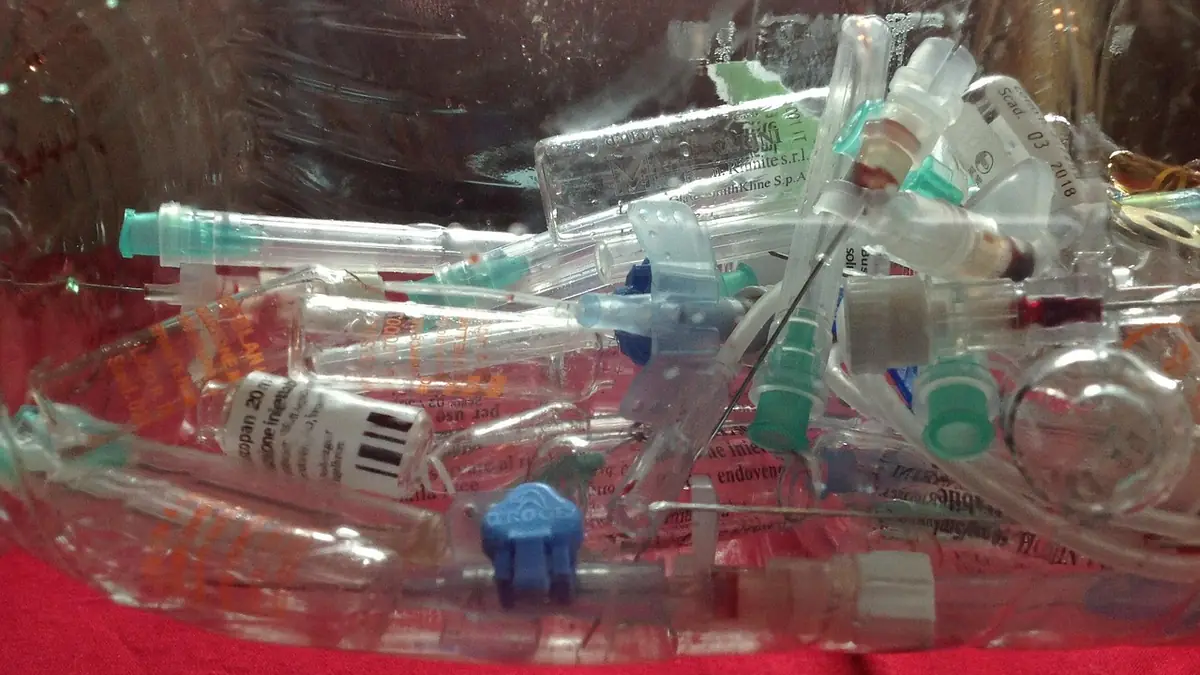
Needlebay sits in the crowded but resilient segment of consumable medical supplies — needles, syringes, and the small accessories that clinics burn through every week. Buyers usually encounter it as a mid-tier brand rather than a premium one, which makes it a practical line for distributors who need dependable volume at a defensible price point.
This guide covers what matters when you evaluate the brand for your catalogue: the likely product mix, typical order quantities, documentation you should demand before listing, and how to merchandise it on a trade show floor without overcommitting budget.
What the Needlebay Brand Typically Covers
Brands in this space generally build their identity around a focused consumable range rather than a full catalogue. Expect hypodermic needles and syringes in the common gauges and volumes, plus safety-engineered variants, pen needles, and low-volume accessories such as caps, hubs, and sharps disposal containers. Buyers should ask for a line sheet with gauge, length, and volume combinations spelled out — the differences between 21G and 27G lines matter more to clinical procurement than brand marketing does.
The practical question is whether the range covers your existing accounts or only part of them. A distributor serving primary care clinics needs different depth than one supplying dialysis or veterinary channels. Map the line sheet against your last twelve months of order history before you commit to a listing; a brand that fills 70% of your consumable demand is usually worth stocking even if the remaining 30% comes from elsewhere.
Packaging format is a frequent source of friction. Retail-facing packs of 100 and bulk clinic cartons of 1,000 or more serve different buyers, and not every supplier offers both. Confirm whether you are buying single-sterile or bulk non-sterile, and check that expiry dating on delivered stock leaves you at least 80% of shelf life remaining.
- Ask for a full line sheet with gauge, length, and volume combinations
- Confirm retail packs vs. bulk clinic cartons
- Check remaining shelf life on delivery (target 80%+)
- Clarify whether safety-engineered variants are in scope
Documentation and Compliance Checks Before Listing
For a consumable line, paperwork is the product. Before listing Needlebay items in any regulated market, request the current ISO 13485 certificate from the manufacturing site, the CE certificate or FDA 510(k) clearance number as applicable, and the most recent declaration of conformity. Certificates expire quietly; diarise the renewal dates and ask for updated copies a quarter ahead rather than after a customer's audit.
Sterility and biocompatibility documentation should travel with the technical file — ISO 10993 series reports, sterilization validation (typically EO or gamma), and shelf-life justification. If the brand sources from more than one factory, insist on documentation per site, not per brand. A single certificate covering three contract manufacturers is a red flag worth resolving before your first purchase order.
Trade show organisers increasingly ask exhibitors to show conformity evidence for the products on display. Our guide to regulatory requirements for medical products at trade shows covers what to prepare, and it is worth reading before you agree to co-exhibit this line.
Order Quantities, Lead Times, and Pricing Bands
Consumable brands at this level usually quote minimum order quantities per SKU rather than per order. Expect MOQs in the region of 5,000 to 20,000 units per gauge or volume variant, with mixed pallet allowances that let you spread the commitment across five or six fast movers. Below that, you are typically paying a distributor premium that erodes the margin you came for.
Lead times depend heavily on whether stock is held in-region or shipped from production. Domestic warehouse stock can turn around in one to three weeks; direct container orders commonly run 8 to 14 weeks door to door, plus customs. For first orders, ask for a small stocked trial quantity even at a price premium — it lets you test demand before committing working capital to a full container.
Pricing should be benchmarked per unit, not per carton, because pack sizes vary between suppliers. Compare landed cost including freight, duty, and any sterilization or testing surcharges. If the numbers are close, model the total cost of exhibiting the line before you decide; a realistic estimate of exhibiting at Medica is a useful starting point.
Positioning Needlebay on a Trade Show Floor
Consumables are not a destination category at medical trade shows, so the display has to earn foot traffic. Put the safety-engineered needle next to a sharps container and a used-needle demonstration unit; clinicians stop for hands-on comparison far more readily than for a shelf of boxes. Allocate roughly 1.5 to 2 metres of a 3x3 stand to the line if it is secondary to your main offering.
Staffing matters more than graphics here. A representative who can discuss gauge selection, dead space, and needle phobia in paediatric use will out-convert a generic salesperson every time. Brief your team on the three most common objections — price versus established brands, compatibility with existing syringe pumps, and documentation availability — and have printed conformity summaries on the counter.
Budget for samples. A consumables stand typically gives away 200 to 500 units per show day, and that cost needs to sit in the booth budget rather than surprise you later. Our booth cost breakdown for medical events shows where sample spend usually falls.
| Parameter | Typical Range | What to Verify |
|---|---|---|
| MOQ per SKU | 5,000–20,000 units | Mixed pallet allowances |
| Lead time (stocked) | 1–3 weeks | Regional warehouse location |
| Lead time (direct) | 8–14 weeks | Incoterms and customs broker |
| Unit price band (basic needle) | €0.02–€0.08 | Landed cost, not ex-works |
| Unit price band (safety-engineered) | €0.15–€0.45 | Sterilization and validation included |
| Shelf life on delivery | 80%+ remaining | Expiry dating on cartons |
| Sample spend per show day | 200–500 units | Budgeted in booth plan |
Working With the Supplier Relationship
Ask early how the brand handles complaints and adverse event reporting. A supplier that cannot describe its vigilance process in a single conversation will be slow when a customer reports a bent needle or a packaging breach. Get the escalation contact in writing, and test it once with a minor issue before you need it for a serious one.
Exclusivity is negotiable but rarely free. Distributors who want territory protection usually have to commit to annual volume targets, often in the range of 100,000 to 500,000 units depending on market size. Read the target clauses carefully: a commitment that looked achievable at signing can become a margin problem if a tender is lost.
Finally, review the relationship annually against real numbers. Measuring trade show success beyond lead count gives a framework for judging whether the brand is actually earning its shelf space, and calculating trade show ROI helps tie exhibition spend to the line's performance.
Common Pitfalls for First-Time Buyers
The most expensive mistake is treating a consumable brand as a single product. Buyers who list one needle SKU and expect pull-through are usually disappointed; the category rewards depth, because clinics order across gauges and volumes in a single requisition. Plan for at least six to ten active SKUs to make the listing worthwhile.
The second is underweighting storage and handling. Sterile consumables need dry, temperature-stable space, and pallets of cartons consume floor area quickly. Check your warehouse capacity against the MOQ before ordering, and confirm whether the supplier will hold buffer stock on your behalf — some will, at a fee.
When Needlebay Fits and When It Does Not
This kind of brand fits distributors with an established clinic or hospital-adjacent customer base, a warehouse that can absorb pallet volumes, and the patience to build a consumable line over two or three seasons. It is a volume game with modest per-unit margins, so the economics only work at scale.
It fits less well for buyers who need a single prestige line for a flagship stand, or who cannot commit working capital to MOQ-level inventory. If your volumes are small or sporadic, sourcing through a regional wholesaler is usually cheaper than becoming a brand distributor.
A Practical Evaluation Checklist
Run the same five checks on any consumable brand you consider, and Needlebay is no exception. First, line sheet completeness against your order history. Second, per-site certificates and their expiry dates. Third, MOQ and lead time in writing. Fourth, landed cost per unit benchmarked against two alternatives. Fifth, the supplier's vigilance and returns process, tested once.
Score each check before signing anything. A brand that passes four of five with a clear remediation plan is usually a better bet than one that passes all five on paper but cannot name its contract manufacturers.
Where the Margin Actually Comes From
Consumable margins come from order frequency rather than unit price. A clinic that reorders needles every six weeks is worth more over three years than a one-off tender win, so price for repeat business and protect the reorder path with simple pack sizes and consistent availability.
Track fill rate as closely as you track margin. A brand that ships 95% complete on time will hold accounts that a cheaper, erratic supplier loses — and that reliability is the real product you are buying when you take on a consumable line.
- Treat a consumable brand as a range, not a single SKU — plan for six to ten active lines.
- Get certificates per manufacturing site and diarise expiry dates a quarter ahead.
- Compare landed cost per unit, including freight, duty, and testing surcharges.
- Budget sample giveaways explicitly; 200–500 units per show day is normal.
Mark brings years of experience in medical product distribution and supplier evaluation. He frequently attends trade shows to scout new brands and technologies. He shares insights on sourcing and negotiation.